Absolute and Relative Humidity: The Relationship with Static Charge
It is commonly said that low relative humidity increases the likelihood of static electricity generation. Is this assertion correct?
What is Relative Humidity?
Relative humidity is defined as the ratio of the current amount of water vapor in the air to the maximum amount of water vapor that air can hold at a given temperature, expressed as a percentage (%). When people refer to “humidity,” they are typically talking about relative humidity.
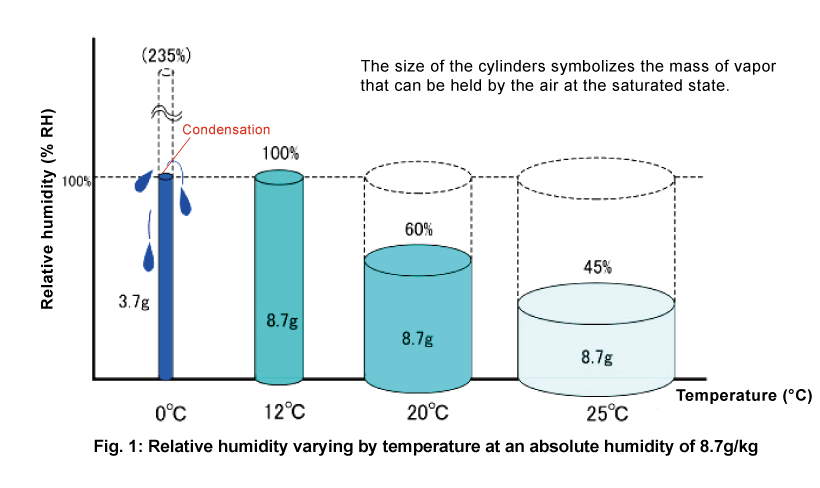
Relative humidity represents the percentage of saturation of water vapor in the air, which changes with temperature. Therefore, even if the actual amount of water vapor in the air remains constant, relative humidity will vary with temperature.
What is Absolute Humidity?
On the other hand, absolute humidity is defined as the mass of water vapor contained in 1 kg of dry air (g/kg).
This measurement provides a clear indication of how much water vapor is in the air. Consequently, when absolute humidity remains constant, the value of relative humidity will change as air temperature changes, as shown in Figure 1.
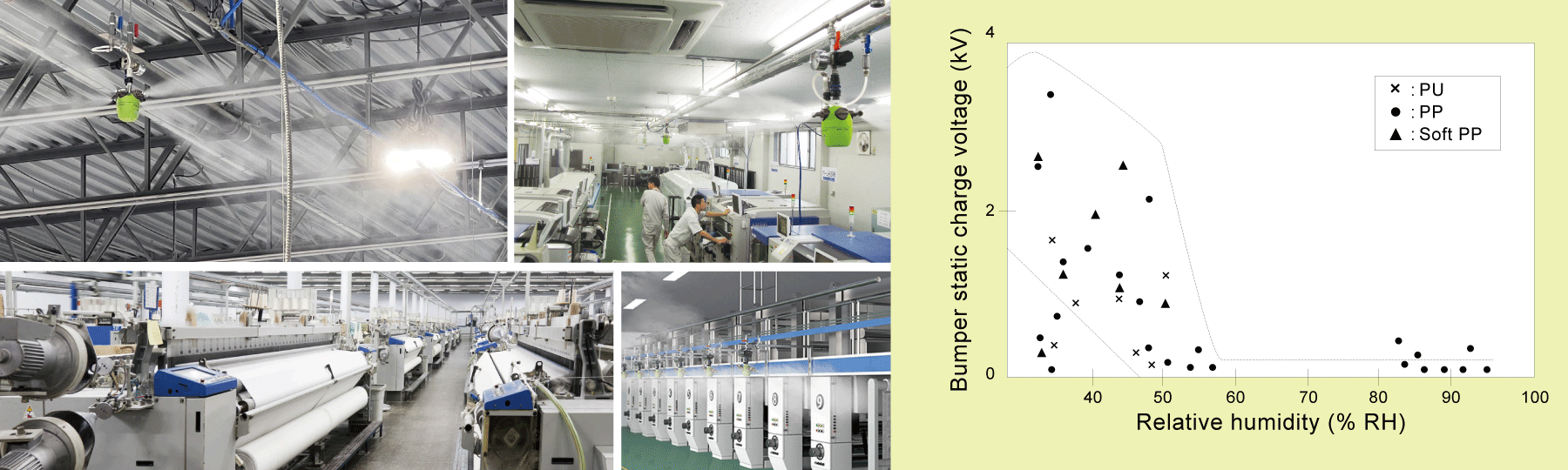
The Relationship Between Static Electricity and Humidity
CONTACT US
For product inquiries or to request brochures, please click here.
