Understanding Industrial Humidifiers | Household vs Industrial | Upgrade Humidification Capabilities
Intro
Dry air can be a sneaky culprit of a multitude of issues within factories, which lead to decreased production, efficiency, and quality. Choosing the right humidification system for your facilities will not only lead to preventing these issues but added health & safety benefits for workers as well. Here, we will highlight the characteristics of industrial humidifiers and how their purpose is served in factory settings.
Characteristics of Industrial Humidifiers
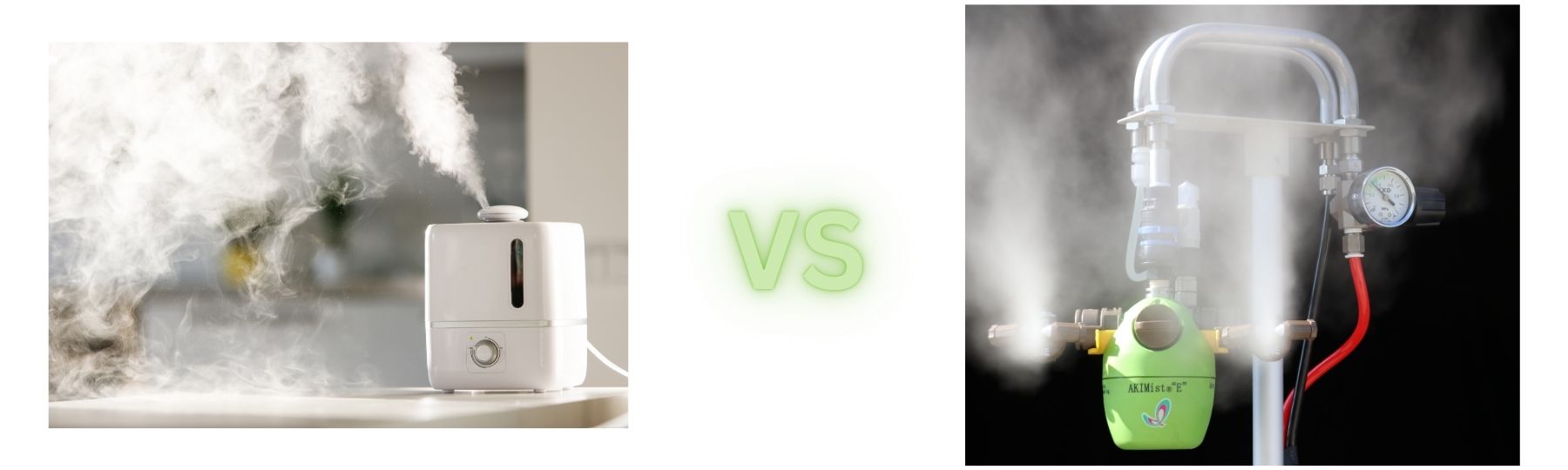
Industrial humidifiers have a larger capacity for humidification compared to household humidifiers. They are widely used in various settings including hospitals, elderly care facilities, nurseries, and schools for health management, and factories, laboratories, museums, etc. for facility / product management. Proper humidification is especially crucial in factories for maintaining product quality, operation efficiency, and fire prevention. Opting for the average household humidifier in these settings will require multiple units, meaning more water & maintenance, and controlled humidification cannot be achieved, meaning products & equipment getting damaged by excessive humidity. Industrial humidifiers are tailored to factory environments and their needs by allowing complete control over humidity levels, minimal maintenance requirements, and additional features & benefits. Let’s explore these key features.
- Health Management:
A quality product is a key ingredient to businesses, but the success of a business is dependent on its workers. Installing a humidification system will help to stop the spread of viruses, relieve common cold symptoms, prevent infections, etc. Keep your workers healthy & happy, and a productive operation will follow.
- Electrostatic Discharge (ESD) Prevention:
You may notice in the winter seasons that the air is significantly drier and find yourself getting shocked throughout the day. These little shocks are tolerable, though annoying, but for factories, static poses as a major threat. Static often leads to product defects, equipment malfunction, and even fires. ESD can be prevented through adequate humidification.
- Dust, Debris, & Foreign Object Suppression:
These are more likely to become airborne and contaminate processes in dry environments. Combined with static, they are even more likely to adhere to production materials. Manufacturing of optical components like camera lenses can experience a decrease in quality, or paint processes can experience uneven surfaces. Controlled humidification suppresses dust and prevents debris from rising from the floor.
- Print Defect Prevention:
CONTACT US
For product inquiries or to request brochures, please click here.
