Different Humidification & Installation Methods | Types of Humidification | Premium Dry Fog
Intro
One of the main ways to classify commercial humidifiers is their humidification method. With so many options, it can be hard to identify the right one for you. Installation methods can also be a great factor in your decision as facility layouts may be limiting. Here, we will explore these methods of humidification & installation, and how they differ.
Humidification Methods
- Evaporation Method:
This method diffuses moisture through a filter soaked in water by blowing air onto it. This is a great option if your goal is to keep power consumption low and eliminate any risk of fire, as it does not require any heating elements. However, with the lack of heat, bacteria are likely to grow on the filter so regular cleaning and maintenance is required. Another downside with the evaporation method is that it has a lower capacity for humidification, so this is not suitable if you’re looking for higher levels of humidity.
- Steam Method:
This method humidifies by evaporating water in the tank. The evaporation is caused by heating the water to a high temperature, which is also effective in suppressing the growth of bacteria. Additionally, its high humidification capacity and resistance to the surrounding environment make it advantageous. Be aware that running costs are higher and high-temperature steam can be hazardous.
- Water Spray Method:
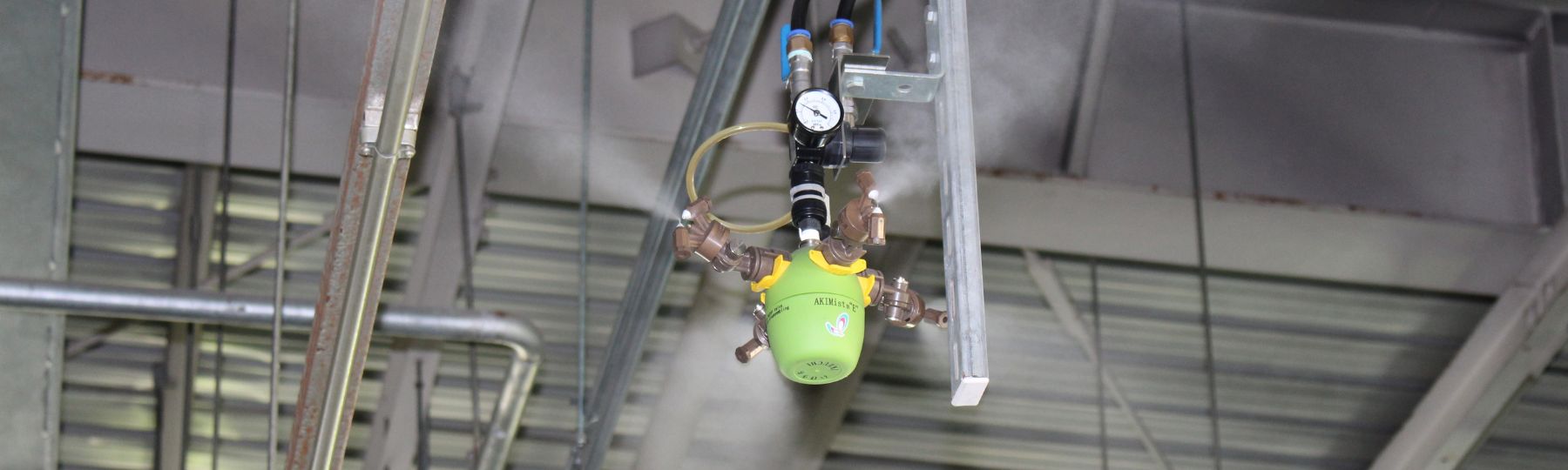
This method takes two different forms, ultrasonic method and high-pressure spray method. Both have low power consumption and high humidification capacity. The ultrasonic method atomizes water into fine particles through ultrasonic vibration. High-pressure humidification sprays water into a mist by applying pressure to the spray nozzle. There are two types of high-pressure spray methods: Hydraulic: Sprays pressurized water with a pump. Pneumatic: Produces even finer water particles by spraying compressed water and air simultaneously. If tap water is used, it will spray the minerals contained in the water, leaving a white cast on surroundings. It is imperative to use purified water to prevent this.
- Passive Method:
This method passes water vapor through a porous wall and flowing air around the wall allows for humidity. Since the porous wall only allows water to pass through, it performs clean (no bacteria) humidification without heating which keeps running costs low. However, regular maintenance is required.
- Hybrid Method:
CONTACT US
For product inquiries or to request brochures, please click here.
