From Static to Stability: How Industrias Maquinsa Improved Nonwoven Production

Manufacturing nonwoven materials requires a high level of process stability. From fiber carding to quality inspection, environmental conditions can directly influence fiber behavior, static generation, and final product consistency.
For manufacturers producing materials used in hygiene products such as wet wipes, diapers, and sanitary pads, even small fluctuations in humidity can lead to disruptions in production and variations in product quality.
This was the situation faced by Industrias Maquinsa, a nonwoven fabric manufacturer based in Puebla, Mexico.
Challenges Caused by Low Humidity
Industrias Maquinsa specializes in manufacturing nonwoven fabrics used across the hygiene products industry. Their production lines depend on stable fiber behavior and precise material control.
However, before implementing a humidity control solution, their team encountered several issues related to low ambient humidity.
According to Ana Encinas from Industrias Maquinsa:
“Before installing a humidity control system, we were dealing with diverse problems in our production process. Static building, variations in the material quality, and efficiency reduction in the production lines.”
Low humidity is a common challenge in nonwoven production environments. As relative humidity drops, static electricity becomes more prevalent. Fibers become harder to control, web formation becomes less stable, and material handling becomes more unpredictable.
In Maquinsa’s case, the instability caused by dry conditions was directly affecting production performance.
“The low ambient humidity was affecting the stability of our processes. It became a priority to find a solution that would allow us a more controlled and reliable environment.”
Discovering a Humidity Control Solution
Related articles
-
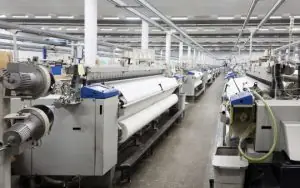
Dry Fog Air Conditioning to Boost Output by 30% and Improve Quality in Textile Factories
#Boost yield#Equipment Downtime Prevention#Productivity Improvement#Quality Improvement#Textile
-
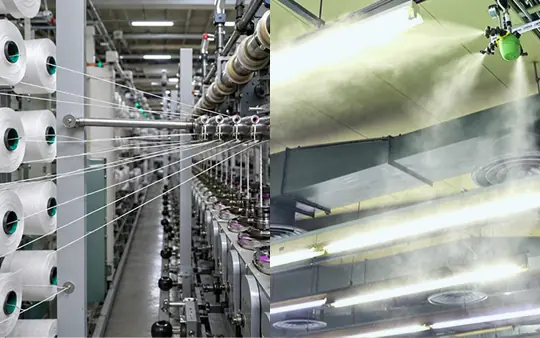
Humidification Improves Yarn Quality and Reduces Static Electricity in False-Twist Texturing
#Insufficient Humidity#Productivity Improvement#Quality Improvement#Textile
-
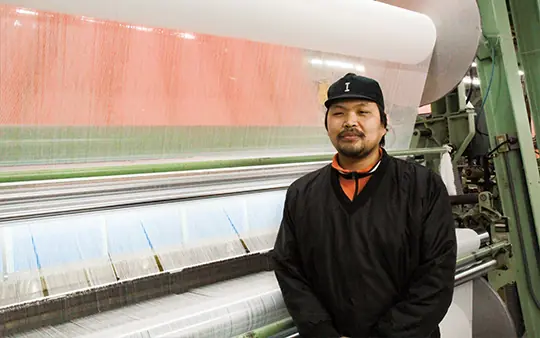
Humidity Control Solved Floor Wetting & Weaving Issues in Towel Production
#Insufficient Humidity#Productivity Improvement#Quality Improvement#Textile
CONTACT US
For product inquiries or to request brochures, please click here.
